
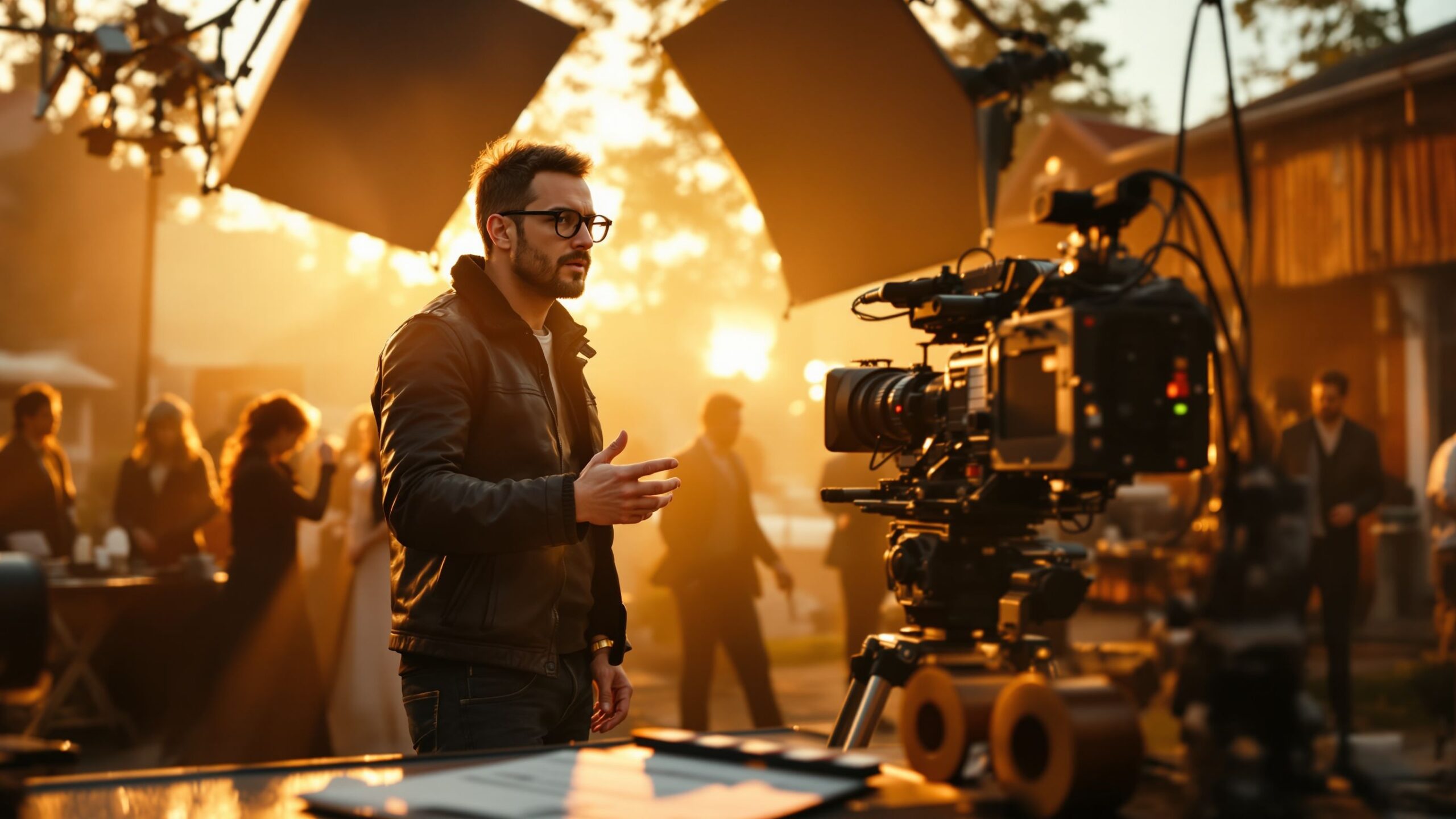
In the world of filmmaking, audiences often credit actors, special effects, or blockbuster budgets for a movie’s success. Yet behind every unforgettable cinematic experience stands a director whose vision shapes every frame. Directing is the invisible force that turns scripts into emotional journeys, orchestrates performances, and transforms simple scenes into iconic moments that stay with audiences for decades. A great director does more than simply tell actors where to stand or where to point the camera. They craft tone, rhythm, pacing, atmosphere, and visual language. The right director can elevate an ordinary screenplay into a masterpiece, turning familiar stories into groundbreaking cinematic events. Through deliberate choices in cinematography, editing, music, and performance direction, visionary filmmakers redefine how stories are told on screen. Throughout film history, there have been moments when directing made the crucial difference between a good movie and a legendary one. Certain films became cultural milestones largely because of the bold creative decisions made behind the camera. From innovative storytelling techniques to daring visual styles, these directors reshaped their projects into works of art that audiences and critics continue to celebrate. Here are ten extraordinary films where directing didn’t just guide the production—it completely transformed the final result.
A: It means the film’s greatness came largely from the filmmaker’s execution, style, and storytelling decisions rather than premise alone.
A: Not always, but brilliant directing can elevate a solid script while weak directing can flatten a great one.
A: Look for visual intention, confident pacing, controlled performances, emotional clarity, and scenes that linger in your mind.
A: No. Some of the best direction is subtle, invisible, and rooted in performance, rhythm, and restraint.
A: An auteur is a director whose personal style and themes are so strong that their films feel unmistakably their own.
A: Yes, but the strongest editing usually grows out of the director’s vision, coverage choices, and scene design.
A: Not at all. Great directors often bring out career-defining performances from actors.
A: Strong direction can turn minimal material into something emotionally rich, focused, and unforgettable.
A: Every genre benefits from direction, but horror, drama, thrillers, and epics especially rely on it for mood and control.
A: Watch blocking, camera movement, framing, transitions, sound use, and how performances change from scene to scene.
1. The Godfather (1972)
When discussing films shaped by extraordinary direction, few examples stand taller than The Godfather. Director Francis Ford Coppola took what could have been a straightforward crime drama and turned it into one of the most influential films ever made.
Coppola’s directing choices defined the tone of the entire movie. He insisted on dark, shadowy cinematography that reflected the moral ambiguity of the Corleone family. Scenes are bathed in deep amber and black hues, giving the film a timeless, almost operatic atmosphere. This stylistic decision alone made the movie visually distinct from other crime films of the era.
Equally important was Coppola’s approach to pacing. Rather than rushing through the narrative, he allowed scenes to breathe. Quiet conversations carried enormous weight, building tension in subtle ways that made every dramatic moment feel monumental.
His guidance of actors also proved transformative. Marlon Brando’s performance as Vito Corleone became legendary in part because Coppola allowed improvisation and subtle character choices to flourish. The result was a crime epic that redefined the genre and set a new standard for cinematic storytelling.
2. Jaws (1975)
Steven Spielberg’s Jaws is often credited as the first modern blockbuster, but its success hinged heavily on Spielberg’s directing instincts.
During production, mechanical problems prevented the film’s shark from appearing as frequently as originally planned. Instead of weakening the film, Spielberg turned this limitation into a storytelling advantage. By hiding the shark for most of the movie and relying on suspense, he created one of the most effective thrillers ever made.
Spielberg used camera angles, sound design, and John Williams’ unforgettable score to suggest danger rather than constantly show it. The audience’s imagination filled in the terrifying details.
His pacing was masterful, slowly building tension until the explosive final act. Without Spielberg’s inventive directing under pressure, Jaws might have been a forgettable monster movie. Instead, it became a landmark film that changed Hollywood forever.
3. Pulp Fiction (1994)
Quentin Tarantino’s Pulp Fiction stands as one of the most distinctive films of the 1990s, largely because of its bold directorial vision.
The screenplay itself was unconventional, but Tarantino’s directing turned its nonlinear narrative into a stylish cinematic experience. By rearranging the timeline and presenting the story out of chronological order, he transformed the film into a puzzle-like exploration of interconnected characters.
Tarantino also infused the film with unique dialogue rhythms and striking visual compositions. Long conversations about everyday topics—such as hamburgers or foot massages—became memorable cinematic moments.
His confident handling of tone allowed the movie to shift seamlessly between humor, violence, and philosophical reflection. The result was a film that felt entirely fresh and helped redefine independent cinema.
4. Schindler’s List (1993)
Steven Spielberg’s Schindler’s List demonstrates how directing choices can profoundly shape emotional impact.
Rather than filming the Holocaust story in color with traditional cinematic flair, Spielberg opted for stark black-and-white cinematography. This decision gave the film a documentary-like authenticity and stripped away visual distractions.
The restrained directing style also emphasized realism. Spielberg avoided melodrama and instead focused on human moments that conveyed the enormity of the tragedy through personal experiences.
One of the most striking examples of directing brilliance is the famous “girl in the red coat” sequence. By using color selectively in an otherwise monochrome film, Spielberg created a haunting symbol that lingers long after the credits roll.
The result was a film that remains one of the most powerful historical dramas ever created.
5. The Dark Knight (2008)
Christopher Nolan’s The Dark Knight proved that superhero films could achieve the complexity and intensity of serious crime dramas.
Nolan approached the material with a grounded directing style rarely seen in comic-book adaptations. Instead of relying heavily on CGI spectacle, he emphasized practical effects and realistic city environments.
The director also focused heavily on character psychology, particularly the chaotic philosophy of the Joker. Through meticulous pacing and tension-building, Nolan transformed the film into a gripping moral battle rather than a simple superhero story.
His use of large-format IMAX cameras for key sequences further elevated the visual scale of the film, creating an immersive experience that pushed the boundaries of blockbuster filmmaking.
Without Nolan’s ambitious directing approach, The Dark Knight might have been another routine comic adaptation. Instead, it became one of the most acclaimed superhero films ever made.
6. Mad Max: Fury Road (2015)
George Miller’s Mad Max: Fury Road stands as a masterclass in visual storytelling and kinetic directing.
The film contains relatively little dialogue, relying instead on relentless action and powerful imagery to tell its story. Miller carefully choreographed every frame to ensure that the audience always understood the geography and stakes of each sequence.
His directing style emphasized clarity amid chaos. Fast-paced editing was balanced with centered compositions, allowing viewers to follow the action even during the most explosive moments.
Miller also embraced practical effects and real stunts whenever possible, giving the film an authentic sense of danger. The result was an adrenaline-fueled cinematic experience that critics widely praised as one of the greatest action films ever made.
7. Parasite (2019)
Bong Joon-ho’s Parasite captivated global audiences through brilliant directing that blended multiple genres into one seamless narrative.
The film begins as a dark comedy about social class but gradually evolves into a suspenseful thriller and ultimately a devastating drama. Maintaining tonal balance across these shifts required extraordinary directorial precision.
Bong’s visual storytelling plays a key role in conveying the film’s themes. The architecture of the wealthy family’s home becomes a symbolic space that reflects class hierarchy and hidden tensions.
Careful framing, subtle camera movements, and meticulous production design allowed Bong to communicate complex ideas visually without relying on heavy exposition.
The film’s success demonstrated how masterful directing can transform a socially conscious story into a gripping cinematic experience.
8. Inception (2010)
Christopher Nolan’s Inception pushed the boundaries of narrative complexity and visual imagination.
The film’s layered dream structure could easily have become confusing, but Nolan’s directing ensured that audiences remained engaged throughout the intricate plot.
He used distinct visual styles for different dream levels, helping viewers subconsciously track where the characters were within the narrative.
Practical effects once again played a major role. The rotating hallway fight sequence, achieved through a massive rotating set, became one of the most innovative action scenes in modern cinema.
Nolan’s ability to balance intellectual storytelling with emotional stakes turned Inception into a blockbuster that challenged audiences while thrilling them.
9. Titanic (1997)
James Cameron’s Titanic combined epic spectacle with intimate storytelling through highly controlled directing.
Cameron orchestrated massive sets, elaborate visual effects, and thousands of extras to recreate the famous disaster with breathtaking realism.
But the film’s emotional power came from his careful handling of character relationships. The romance between Jack and Rose provided a human anchor that made the historical tragedy deeply personal.
Cameron also used pacing strategically, gradually escalating tension during the ship’s final hours. By the time the iceberg struck, audiences were already fully invested in the characters’ fate.
The film’s immense success proved that strong directing can blend spectacle and emotion into a cinematic phenomenon.
10. The Lord of the Rings: The Fellowship of the Ring (2001)
Peter Jackson faced an enormous challenge when adapting J.R.R. Tolkien’s beloved fantasy epic. The success of The Fellowship of the Ring was largely due to Jackson’s visionary directing.
He approached the material with deep respect for Tolkien’s world while also making smart adjustments to fit the cinematic format. His use of practical locations in New Zealand gave Middle-earth a sense of authenticity rarely seen in fantasy films.
Jackson carefully balanced intimate character moments with sweeping epic battles. His directing ensured that audiences connected emotionally with the Fellowship while also being awed by the scale of the adventure.
The film launched one of the most successful trilogies in cinematic history and proved that fantasy could achieve mainstream blockbuster status without sacrificing depth.
The Power of Vision Behind the Camera
The films on this list demonstrate that directing is one of the most powerful forces in cinema. While scripts, performances, and special effects all contribute to a movie’s success, it is the director who unifies these elements into a cohesive artistic vision.
A great director understands how to guide actors, control pacing, shape visual style, and create emotional resonance. They transform raw creative ingredients into unforgettable cinematic experiences.
Throughout film history, visionary directors have repeatedly proven that the right creative leadership can elevate a movie from entertaining to extraordinary. Their choices behind the camera shape how stories are told, remembered, and celebrated.
As audiences continue to discover new films and revisit classics, one truth remains clear: when directing truly shines, it can make all the difference between a movie that is merely watched and one that becomes legendary.


