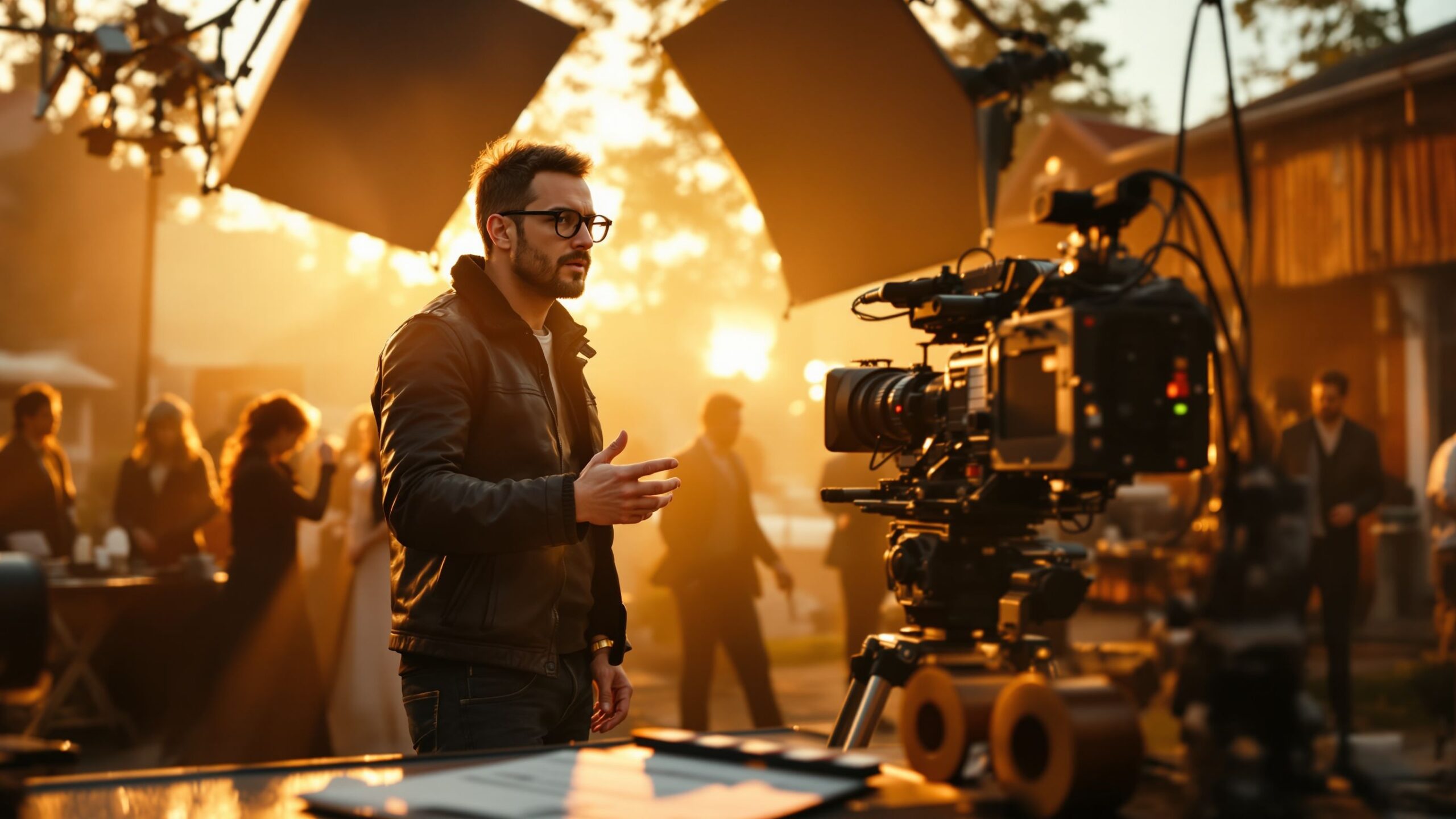
A true blockbuster does not begin with explosions, spectacle, or celebrity casts. It begins with a question whispered in the mind of a filmmaker: What story am I trying to tell, and how should it be told? From that quiet moment onward, every beat of the film—every shot, every line, every risk and restraint—is shaped by the director’s vision. The most unforgettable cinematic epics are not defined by budgets or box office alone. They live and breathe because a director imagines something bigger than the page and then convinces hundreds of artists and technicians to believe in it. In this deep dive into the making of a blockbuster, we explore exactly how directors transform enormous productions into cohesive and emotionally powerful big-screen experiences.
A: The director shapes performances, visuals, pacing, and tone, guiding every creative department toward a unified vision.
A: The script is words on a page; the director decides how those words look, sound, and feel in every moment on screen.
A: Strong director vision personalizes familiar formulas with distinct style, themes, and character choices.
A: It’s a version of the film that reflects the director’s preferred pacing, scenes, and structure—often longer or more character-focused.
A: It varies; some have near-total creative control, while others negotiate vision with producers, studios, and test audiences.
A: Light and color set mood, guide attention, and support emotional beats, making the film’s world feel cohesive and intentional.
A: Many plan extensively with shot lists and storyboards but still leave room for improvisation and discoveries on set.
A: They build trust, discuss character motivation, and adjust pacing or blocking until the performance feels truthful.
A: Familiar collaborators understand the director’s style and shorthand, allowing them to execute the vision more smoothly.
A: Look for recurring themes, camera moves, framing choices, color schemes, or character types that appear across their films.
The Vision Begins: Interpreting the Script Beyond the Page
The journey toward a blockbuster always starts with the script, but the director does not simply read it; they interpret it. While most readers imagine scenes literally as written, a director reads between the lines, searching for rhythm, themes, symbolism, emotional arcs, and the deeper motivations that drive characters forward. They ask how the story should look, sound, and feel. Should the world be gritty or stylized? Should the pacing feel breathless or contemplative? Should the environment overwhelm the characters, or should it serve as a subtle extension of their inner conflicts?
These questions allow the director to build the early skeleton of the film’s tone. Once a director understands the emotional blueprint, they begin imagining how each scene might unfold visually. The screenplay is no longer a static document. It becomes an evolving roadmap for cinematic expression.
Building the Movie’s DNA: Style, Tone, and Genre Fusion
Every blockbuster has a defining style, whether grounded realism, sweeping fantasy, neon-lit futurism, or something entirely original. It is the director who sets this DNA. A superhero film under one director may feel gritty and grounded, while another director might embrace color, humor, and kinetic energy. The style chosen becomes the film’s cinematic identity.
Tone is equally critical. A director decides how playful, serious, warm, cold, hopeful, or tragic the film should be at any given moment. Tone guides how characters speak, how music swells, how conflicts escalate, and how the audience connects emotionally.
Many modern blockbusters succeed because directors fuse genres in unexpected ways. They blend action with emotion, humor with tension, and intimacy with spectacle. The result is a multilayered experience that appeals to global audiences while maintaining artistic depth.
The Art of Visual Storytelling: Cameras as Narrative Tools
Blockbusters thrive on visual storytelling, and directors shape that visual language long before cameras roll. The placement of a camera, the shift of a lens, and the rhythm of cuts carry emotional meaning. A sweeping crane shot can evoke triumph. A handheld close-up can reveal vulnerability. A wide landscape can dwarf a character, hinting at their internal struggle.
Directors collaborate with cinematographers to design visual motifs—recurring shapes, colors, camera angles, or lighting patterns that reinforce themes. For example, a rising angle may signify empowerment throughout the story, or a specific color palette may track a character’s emotional evolution. These decisions ensure that even silent moments speak volumes.
Pre-Visualization: Turning Imagination Into Actionable Plans
Before a single set is built, the director visualizes the film through storyboards, animatics, mood reels, virtual cameras, and conceptual artwork. Pre-visualization allows the director to refine pacing, scale, geography, and action flow.
Large action sequences especially demand meticulous planning. Directors must anticipate how fast the camera moves, when characters enter frame, how visual effects will be integrated later, and how to maintain visual clarity amid chaos. By pre-visualizing the blockbuster’s biggest moments, directors ensure that everything on set serves the narrative rather than overwhelming it.
Casting: Choosing the Beating Heart of the Epic
A blockbuster becomes personal when characters feel real, and that authenticity begins with casting. A director chooses actors who not only fit the role physically but embody the emotional essence of the character. They look for performers who can elevate dialogue, make surprising choices, and adapt to the film’s tone.
Directors also consider chemistry—how actors interact with one another in subtle, unscripted ways. A single glance, hesitation, or laugh between performers can transform a scene into something unforgettable. When casting aligns perfectly with the director’s vision, the entire film gains emotional clarity.
World-Building: Designing Environments That Tell Stories
In a blockbuster, environments must feel lived-in, purposeful, and emotionally resonant. Directors guide production designers, set decorators, prop masters, and visual effects teams to create worlds that enrich the story rather than distract from it.
Every room, landscape, and futuristic cityscape is built with intention. A director may ask: What objects matter to the character? How does the architecture reflect the culture or conflict? What details hint at history, technology, or social dynamics?
The worlds of blockbusters are vast, but the director makes them intimate by grounding them in meaning.
Costume and Makeup: Creating Characters Through Physical Identity
Costume designers and makeup artists are essential collaborators in shaping character identity. A director may choose specific silhouettes, textures, color palettes, or symbolic accessories to reflect internal journeys. Subtle changes in wardrobe can signal power shifts, emotional growth, or turning points within the story.
Makeup design also sets the world’s rules—whether naturalistic, stylized, futuristic, or mythical. When aligned with the director’s vision, costume and makeup transform performers into living embodiments of the story.
Directing Actors: Guiding Emotion, Authenticity, and Connection
A director’s most delicate and powerful responsibility is guiding actors’ performances. They help actors dig into psychology, understand motivations, and explore vulnerability. Many directors avoid dictating emotions and instead ask probing questions that allow actors to discover truth.
Blockbuster scenes often involve massive sets, green screens, or complex choreography. It is the director’s task to help actors imagine the unseen and maintain emotional continuity across fragmented shooting schedules. When the director creates trust and clarity, performances flourish, grounding even the most spectacular films in human authenticity.
Action Design: Crafting Spectacle With Purpose
Blockbusters rely on action, but action must serve story. Directors collaborate closely with stunt coordinators, fight choreographers, vehicle experts, and visual effects supervisors to build sequences that feel exciting yet meaningful.
A great director does not rely solely on spectacle. They ask what each action moment reveals about character. Does a chase scene expose determination? Does a battle reveal fear or resilience? Does a failure become a turning point? By connecting emotion to spectacle, directors elevate action into narrative.
Managing Massive Productions: Leadership Behind the Camera
A blockbuster set is a small city. Hundreds of crew members operate simultaneously across lighting, sound, props, costumes, stunts, transportation, catering, and logistics. The director is the creative leader who unifies all departments under a single vision.
This leadership extends beyond artistic direction. It includes communication, conflict resolution, motivation, and the ability to make fast decisions under pressure. A director who maintains clarity, confidence, and creativity becomes the anchor that keeps the production on course.
Soundscapes and Scores: Crafting the Emotional Pulse
Long after audiences forget the dialogue, they remember the music. Directors work with composers and sound designers to create emotional resonance through audio. They discuss motifs, themes, instrumentation, and how the score should evolve as characters grow.
Sound design—environmental effects, footsteps, explosions, whispers—builds atmosphere. Directors treat audio as another storytelling layer, sculpting tension, awe, and catharsis. The right soundscape turns a moment into a memory.
Editing: Sculpting the Epic After the Cameras Stop Rolling
A blockbuster truly comes to life in the editing room. The director and editor shape the story’s rhythm, structure, and emotional arc. They remove scenes that slow momentum, extend moments that need weight, tighten performances, and refine pacing.
Editing also determines how action flows, how tension builds, and how visual motifs echo through the narrative. Directors watch the film repeatedly, adjusting micro-details to ensure the final version aligns perfectly with their vision. This stage is where the epic becomes whole.
Visual Effects: Enhancing Reality Without Losing Humanity
Modern blockbusters rely heavily on VFX, but the best directors treat digital effects as tools, not shortcuts. They work closely with VFX supervisors to achieve believable and emotionally grounded visuals.
Directors decide how much should be physical and how much digital. They aim for realism, even in fantastical scenes, by grounding effects in physics, lighting accuracy, and actor interaction. When done well, VFX enhances narrative instead of overshadowing it.
Color Grading: The Final Layer of Cinematic Expression
Color grading shapes mood, tension, warmth, realism, and stylistic identity. Directors collaborate with colorists to fine-tune palette, contrast, exposure, and visual emphasis. A warm grade may evoke nostalgia or hope. A cold grade may build tension or isolation.
This final layer ensures that every frame aligns with the emotion the director intends.
Marketing the Vision: Trailers, Posters, and Audience Expectation
A director’s role continues into marketing. Trailers must reflect tone without revealing too much. Posters must communicate story identity at a glance. Directors often oversee key art, press interviews, behind-the-scenes releases, and message control.
The way a blockbuster is marketed shapes how audiences experience it. When marketing aligns with the director’s vision, the film’s emotional promise remains consistent from the first trailer to the final credits.
Why Director Vision Matters: Crafting Emotional Legacy
What elevates a blockbuster from entertainment to epic is emotional legacy—how long the story stays with audiences. This legacy is born from directorial vision. A director decides which moments should shock, soothe, inspire, or devastate. They determine what the film says about heroism, fear, sacrifice, love, or transformation.
When the audience leaves the theater, they remember not just what they saw, but what the director made them feel.
Behind Every Blockbuster Is a Vision Worth Fighting For
A big-screen epic is not a lucky accident. It is the result of thousands of choices guided by a single creative force. From script interpretation to casting, world-building, visual design, sound, editing, and marketing, the director orchestrates every component with intentionality. Their vision becomes the compass by which hundreds of artists navigate.
When a director’s imagination, leadership, and storytelling instincts converge, a blockbuster becomes more than a film. It becomes an experience—one that reaches across cultures, generations, and imaginations. The making of a big-screen epic begins with vision, but it lives forever because that vision was strong enough to transform a story into something truly unforgettable.